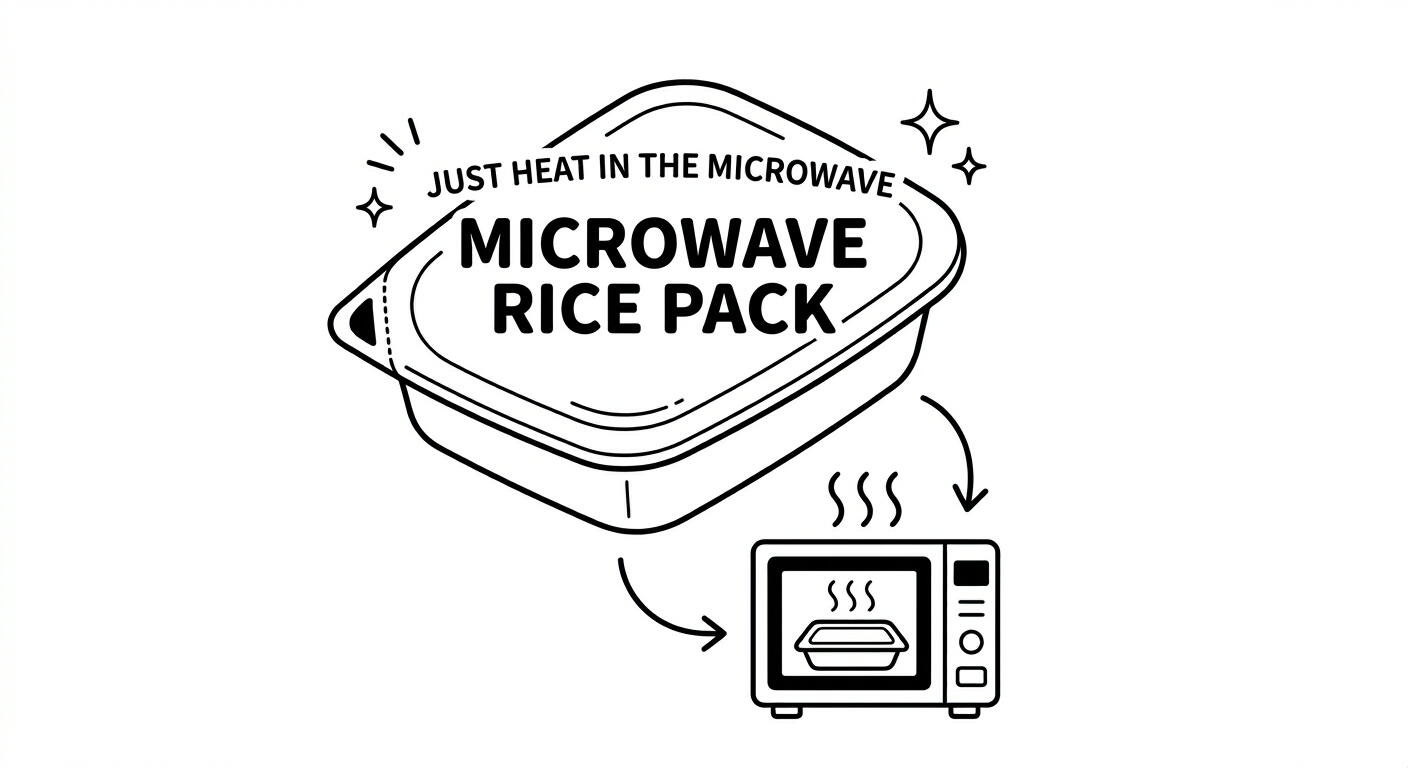
Japanese Microwave Rice Packs: The Easy Souvenir That Brings Japanese Rice Home:
Cooking Japanese short-grain rice well takes the right rice, the right water ratio and a bit of practice, which is hard to repeat abroad. Japan’s ready-to-eat rice packs skip all of that. You peel back a film, heat the pack in a microwave for about two minutes, and you have a bowl of hot, fluffy rice. The packs are light, cheap and easy to pack, and they are a popular pantry item for people living in Japan. This guide explains how rice packs work, which brands to look for, how to heat them, and what to check before you fly home, including the 100 ml liquid rule for carry-on bags and customs declarations. Rules and products change, so always check official sources before you travel.
Quick Overview
| Item | Details |
|---|---|
| What it is | Fully cooked rice sealed in a plastic tray or pouch |
| Typical portion | About 150 g to 300 g per pack, with 200 g common |
| Heating time | About 2 minutes in a microwave, or about 15 minutes in boiling water (check the pack) |
| Storage | Room temperature, away from direct sunlight, with the best-before date printed on the pack |
| Best for | Easy meals, curry, onigiri, bento, travel and emergency pantry stock |
Why Rice Packs Make a Great Souvenir
- No rice cooker needed. One retailer describes Sato’s pack as a way to enjoy Japanese rice without a rice cooker or Instant Pot.
- Fast. The packs are designed to heat in about two minutes in the microwave.
- Tastes like cooked rice, not instant rice. A well known bento blog says the packs taste like decent, freshly cooked rice, not like mushy boil-in-a-bag rice.
- Shelf stable. Retailers describe the packs as sealed by an aseptic process and stable at room temperature. One retailer lists a shelf life of about 10 months for Sato packs. Treat that as a retailer’s figure, and check the date on your own pack.
- Pairs with everything. Serve it with curry, furikake, grilled fish, natto or an egg, or use it for onigiri and bento. One retailer notes that Sato’s Koshihikari rice tastes good even when cold.
- Pairs well with other souvenirs. Curry roux, instant miso soup and furikake are all easy to pack alongside rice packs. See our guide to Japanese curry and cream stew roux for ideas.
Popular Rice Pack Brands
Supermarkets in Japan carry many brands. These are named most often in English-language guides.
- Sato no Gohan (Sato Foods): A standard rice pack brand based in Niigata. A common product is made with Niigata Koshihikari rice in a 200 g tray, sold individually or in multi-packs. Retailers list heating times of about 2 minutes at 500 to 600 W and about 1.5 minutes at 1000 W, or about 15 minutes in boiling water.
- Sato Uonuma Koshihikari and other variants: Smaller 150 g portions and larger 300 g portions are sold, plus brown rice and other varieties.
- Iris Ohyama Pack Gohan: A retort-style rice pack made with 100 percent Japanese rice. A retailer says it heats in about 2 minutes in the microwave or about 3 minutes in boiling water. A site that sells it lists a 10-pack of 200 g packs for 2,165 yen including tax, so prices are modest.
- Regional and local brands: Packs made with rice from a specific region, such as Hokkaido’s Nanatsuboshi, Aizu Koshihikari or Tochigi Koshihikari, appear on retailer sites and make interesting gifts.
Tip: Koshihikari is a widely known Japanese rice variety. If you want to compare flavors, buy a few regional types and taste them side by side.
How to Heat a Rice Pack
Always follow the instructions printed on your pack, because wattage, steam holes and container shapes differ.
- Step 1: Remove the outer box or wrapper. Keep the rice in its plastic tray.
- Step 2: Peel the film back. Most packs say to peel the lid film to a dotted line, or to open a corner of the pouch.
- Step 3: Microwave. A common instruction is 2 minutes at 500 to 600 W. Many microwaves abroad are stronger than that, so start with a shorter time and add more if needed.
- Step 4: Be careful with steam. Remove the tray carefully, peel the film all the way and serve.
- Boiling water option: Some packs can be heated in boiling water for about 15 minutes. Leave the film on and follow the pack instructions.
- Not for toaster ovens. A retailer says Sato’s pack should not be heated in an oven toaster.
Flying With Rice Packs: Carry-On, Checked Bags and the 100 ml Rule
Many travelers wonder whether rice packs count as liquids because they feel moist. The answer depends on the rules, the airport and the screener, so here is how to think about it.
What Japan’s rule says
- Japan applies the 100 ml rule to all international flights departing from its airports. Containers of liquid larger than 100 ml are not accepted in carry-on bags, even when they are partly filled, and containers must fit in a transparent resealable bag of 1 liter or less, according to the Ministry of Land, Infrastructure, Transport and Tourism (MLIT).
- MLIT says the restriction covers liquids, gels and aerosols, and also items that cannot keep their shape without a container.
- A 2015 MLIT reference chart lists curry, soup and risotto in plastic containers or vacuum packs as covered by the restriction, with an exception noted for rice packed in plastic containers or vacuum packs. This suggests packaged cooked rice is not treated as a liquid in Japan, but the same document says the security screener makes the final decision, and the chart is only a list of typical examples.
- Your rice pack may also be covered by other rules at your transit or destination airport, which can be stricter.
The safe approach
- Put rice packs in your checked luggage. The MLIT document itself recommends putting restricted items in checked baggage if you will not use them in the cabin, and checked bags generally have no 100 ml limit.
- If you must carry them on, keep the packs in an easy to reach place and be ready to show them to the screener. If an officer treats them as liquids, you may be asked to leave them behind, so do not bring packs you cannot afford to lose.
- Watch your transfers. The MLIT note warns that items bought after screening may be confiscated at another country’s security check during a transit, depending on its rules.
- Ask your airline if you are unsure, especially for long itineraries with several airports.
Also keep in mind that curry, soup and other pouch foods are treated differently from rice, and are listed as restricted when larger than 100 ml.
Customs: What to Declare When You Arrive
Rules for bringing food into a country are set by the destination, not by Japan, and they vary a lot. Rice is a plant product, and some countries are strict about it. Always declare food when the arrival card or officer asks, even if you think it is allowed.
- Australia: A 2025 airline-industry page says raw rice is not permitted, and processed rice products, including microwave-ready rice pouches, must meet import conditions listed in the government’s BICON database. Check BICON or the Australian Department of Agriculture website before you pack rice packs.
- New Zealand: A news article says travelers must declare all food items for personal use, even ones that are allowed. Biosecurity officers decide what may enter.
- United States: A travel article summarizing guidance says travelers must declare all food products on arrival. I could not confirm the exact rule for cooked rice packs, so check the website of U.S. Customs and Border Protection or the Department of Agriculture.
- Other countries: Check your own government’s customs or agriculture website. Rules for packaged rice, plant products and food from Japan can differ.
Tips
- Keep packs in their original, sealed, labeled packaging, with ingredients and the manufacturer visible.
- Do not open packs before inspection.
- Declare honestly. Penalties for undeclared food can apply in some countries.
- If the rule is unclear, ask the officer, or leave the item at the airport rather than risk a fine.
Buying and Packing Tips
- Where to buy: Supermarkets, drugstores, convenience stores and large discount stores in Japan sell rice packs. Our Don Quijote guide explains the tax-free refund system that started on November 1, 2026. Items bought tax-free must not be opened or used in Japan, and all items on the receipt must be with you at departure.
- Mind the weight. A single 200 g pack weighs about the same as a small bag of rice, so a 10-pack is around 2 kg. Check your airline’s luggage allowance.
- Protect the packs. Keep them flat in the middle of your suitcase, wrapped in clothing, away from sharp objects and heat.
- Check the date. Choose packs with a long best-before date, and plan to eat them in order.
- Pick a few portion sizes. 150 g packs suit a light side dish, 200 g is standard, and 300 g is a hearty portion.
Frequently Asked Questions
No. They are already cooked. You only need to heat them, usually in a microwave.
Many packs can be heated in boiling water. Check the instructions on the pack.
Japan’s official reference chart lists rice in plastic containers or vacuum packs as an exception to the liquid rule, but the screener decides and other countries may differ. The safest place for rice packs is checked luggage.
It is safest to declare them. Many countries require you to declare all food, and some, such as Australia, have specific import conditions for microwave rice pouches.
Check the best-before date on the pack. Retailers describe shelf lives of several months at room temperature for sealed packs, but this varies by product.
Rice packs often list only rice, or rice and water, as ingredients, but check the label of each product.
Next Steps
Buy a few different rice packs on your last full day in Japan, check each best-before date, and pack them in your checked luggage. Before you fly, read your destination’s customs rules for rice products and declare them on arrival. At home, heat one pack with a bowl of curry to check the microwave time for your oven.
This post is part of an ongoing series on Japan travel planning. Check back for more itinerary guides and regional travel tips.
PR

| Rakuten Travel is one of Japan’s largest and most popular domestic travel booking platforms. It features an extensive database of hotels, ryokan, resorts, and other accommodations across Japan, making it an excellent choice for travelers looking to book stays throughout the country. Available in your language. If you’re using a computer, click “Language” in the top-right corner to change the language. If you’re using a smartphone, tap the person icon in the bottom-right corner, then tap “Language” to select your preferred language. |
