The Perfect 3-Day Kyoto Itinerary:
Three days is enough time to see Kyoto’s most iconic sights without feeling rushed at every stop, provided you group your days by area rather than crisscrossing the city. This itinerary organizes your visit around eastern, western, and central Kyoto, with a flexible option for day three depending on your interests.
Itinerary Overview
| Day | Area | Focus |
|---|---|---|
| 1 | Eastern Kyoto (Higashiyama) | Fushimi Inari, Kiyomizu-dera, Gion |
| 2 | Western Kyoto (Arashiyama) | Bamboo grove, Tenryu-ji, Kinkaku-ji |
| 3 | Central Kyoto (flexible) | Nijo Castle, Nishiki Market, Philosopher’s Path, or a day trip |
This grouping minimizes backtracking across the city, since Kyoto’s major sights cluster geographically rather than sitting close together downtown.
Day 1: Eastern Kyoto (Higashiyama)
- Early morning: Fushimi Inari Taisha. Arrive as early as possible, ideally before 8am, to experience the famous thousands of vermillion torii gates without the crowds that build steadily through the day. The full hike to the summit takes 2 to 3 hours round trip, but walking even partway up the mountain is worthwhile if you’re short on time.
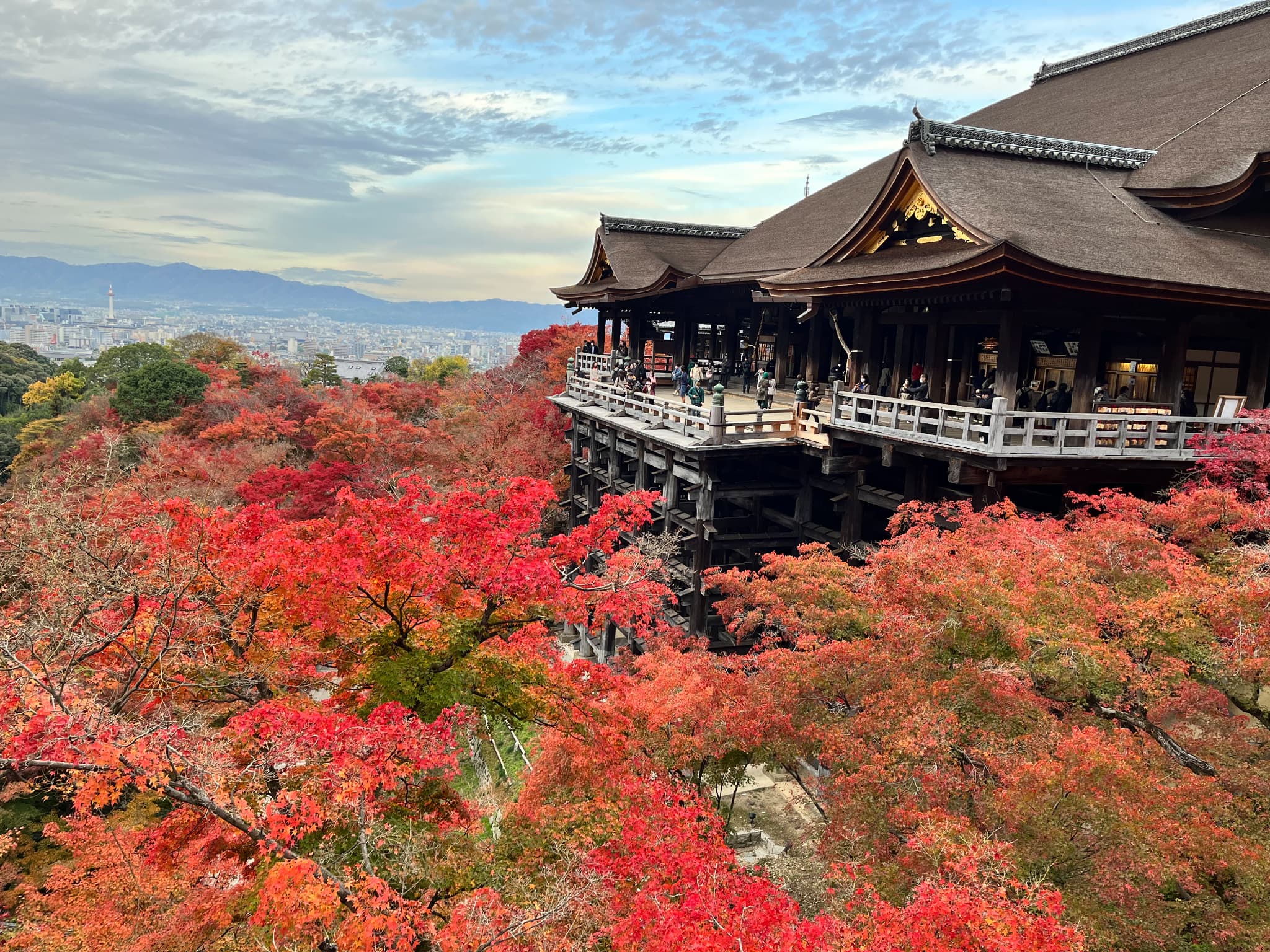
- Midday: Kiyomizu-dera. A wooden temple built on a hillside, offering sweeping views over Kyoto from its famous wooden stage. The approach streets, Sannenzaka and Ninenzaka, are lined with traditional shops and are worth a slow walk in both directions.
- Afternoon into evening: Gion. Kyoto’s historic geisha district, known for narrow streets lined with traditional wooden machiya buildings. Late afternoon into early evening is a good time to wander, when the light is soft and there’s a chance of spotting a geiko or maiko on their way to an appointment.
- Evening: Yasaka Shrine and Maruyama Park. Conveniently located at the edge of Gion, worth a stop as your day winds down, particularly during cherry blossom season when the park’s weeping cherry tree is lit up at night.
Day 2: Western Kyoto (Arashiyama)
- Morning: Arashiyama Bamboo Grove. Arrive early, similar to Fushimi Inari, since this narrow path becomes very crowded by mid-morning. The grove itself only takes about 15 to 20 minutes to walk through, but the atmosphere is best appreciated without a dense crowd.
- Late morning: Tenryu-ji Temple. A UNESCO World Heritage temple adjacent to the bamboo grove, known for its beautifully designed garden incorporating the surrounding mountains as borrowed scenery.
- Midday: Togetsukyo Bridge and the Arashiyama riverside. A scenic spot for a relaxed lunch, with several restaurants overlooking the river, particularly striking during cherry blossom or autumn foliage season.
- Afternoon: Kinkaku-ji (Golden Pavilion). A separate trip across town from Arashiyama, but worth the detour, this gold-leaf-covered pavilion reflected in its surrounding pond is one of Kyoto’s most photographed sights.
- Late afternoon: Ryoan-ji (optional). A short distance from Kinkaku-ji, home to one of Japan’s most famous zen rock gardens, worth adding if you have energy left in the day.
Day 3: Central Kyoto (Flexible)
This day works well as a mix-and-match based on your interests, or as a day trip out of the city if you’d rather explore beyond central Kyoto.
Option A: Central Kyoto sightseeing
- Morning: Nijo Castle. A former shogun residence known for its elaborate interior and “nightingale floors,” designed to squeak as a security measure against intruders.
- Midday: Nishiki Market. A narrow, covered shopping street packed with food stalls, ideal for a grazing-style lunch trying multiple small bites rather than a single sit-down meal.
- Afternoon: Philosopher’s Path and Ginkaku-ji. A quiet, canal-side walking path connecting several temples, ending at Ginkaku-ji (the Silver Pavilion), a more understated counterpart to Kinkaku-ji.
Option B: Day trip alternative
- Nara, for the free-roaming deer of Nara Park and Todai-ji Temple’s giant bronze Buddha, is a popular half-day trip easily reached from Kyoto Station.
- Uji, known for high-quality matcha and the Byodo-in Temple (the building depicted on the ¥10 coin), makes for a quieter, tea-focused alternative closer to Kyoto.
Getting Around Kyoto
Kyoto’s bus network covers most major sights, and a one-day bus pass is worth considering if your day involves several stops. For Arashiyama and some outer areas, trains (JR or the Randen tram line) are often faster than buses given traffic. Walking between sights within the same area, Higashiyama in particular, is often more pleasant and just as fast as waiting for a bus.
Frequently Asked Questions
Yes, for the highlights covered in this itinerary. It won’t allow time for everything Kyoto offers, since the city has an enormous number of temples and shrines, but this itinerary covers the most iconic, frequently recommended sights without feeling rushed
Yes, strongly recommended. Both become significantly more crowded as the day progresses, and an early visit, ideally before 8am, offers a noticeably different, quieter experience at both locations.
It depends on your priorities. If you haven’t been to Nara before and want to see its deer and giant Buddha, it’s a worthwhile addition. If you’d rather have a slower-paced final day within Kyoto itself, sticking with Option A works just as well.
Most, including Fushimi Inari, the bamboo grove, and Gion, are free and don’t require advance booking. Kinkaku-ji, Tenryu-ji, and Nijo Castle all charge an entrance fee, generally payable on arrival without needing to book ahead, though checking current policies closer to your trip is worth doing.
Next Steps
Book your Kyoto accommodation in advance, particularly during cherry blossom or autumn foliage season, and plan your early mornings around Fushimi Inari and the bamboo grove specifically to avoid the heaviest crowds. If your schedule allows for a fourth day, Uji or Nara both make excellent, easy additions to this itinerary.
This post is part of an ongoing series on Japan travel planning. Check back for more itinerary guides and regional travel tips.
PR

| Rakuten Travel is one of Japan’s largest and most popular domestic travel booking platforms. It features an extensive database of hotels, ryokan, resorts, and other accommodations across Japan, making it an excellent choice for travelers looking to book stays throughout the country. Available in your language. If you’re using a computer, click “Language” in the top-right corner to change the language. If you’re using a smartphone, tap the person icon in the bottom-right corner, then tap “Language” to select your preferred language. |
