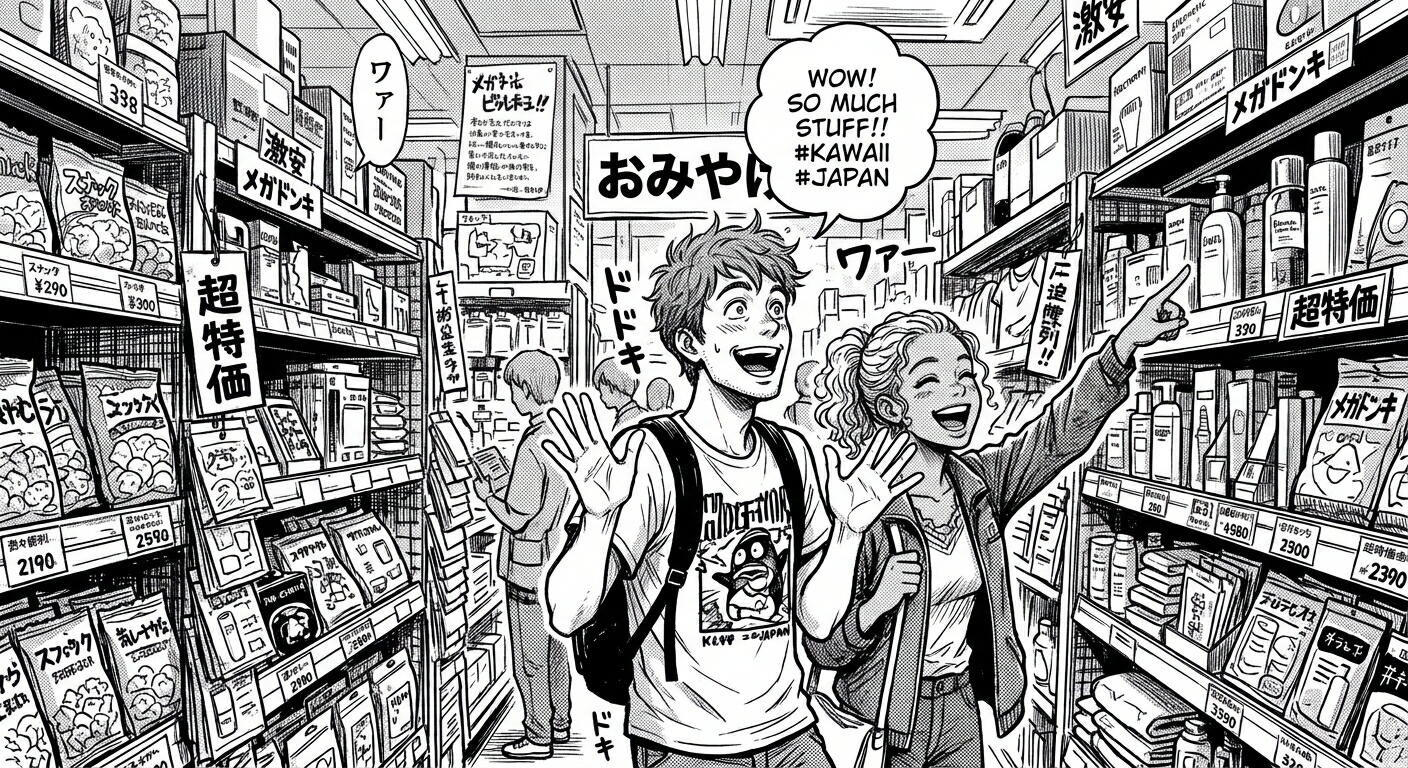
Don Quijote (Donki) Guide for Visitors:
Don Quijote, nicknamed “Donki,” is one of the most popular stops for overseas visitors in Japan, and for good reason. It is a giant discount chain where almost everything you might want to take home, from snacks and medicine to cosmetics and gadgets, sits under one roof. Many stores are open late, and some never close. For most travelers, a single visit can cover the majority of their souvenir shopping. This guide explains why Donki is so popular, lists the items visitors buy most, and walks you through the new tax-free refund rules that started on November 1, 2026. Product lineups, prices and rules change, so confirm details in store or on official pages.
Why Don Quijote Is So Popular
| Reason | What it means for you |
|---|---|
| One-stop shopping | Food, drinks, medicine, cosmetics, electronics, fashion, toys and luggage in one place |
| Souvenir headquarters | Many stores stock a large share of items popular with overseas visitors |
| Late hours | Many city stores open late, and some operate 24 hours |
| Tax-free service | Tourist-area stores have tax-free counters |
| Multilingual help | English, Chinese and Korean support, plus video interpreting at some stores |
| Low prices and fun layout | Bulk buying keeps prices down, and the packed shelves make browsing an experience |
A true one-stop shop. The chain carries a very wide range of goods, including food, clothing, cosmetics and electronics, according to a Japanese shopping magazine. That means you can pick up gifts for coworkers, family and friends in a single trip instead of visiting a snack shop, a drugstore and an electronics store separately. One guide to a Shinjuku branch says more than 70 percent of its stock consists of items popular with foreign tourists.
Open when you are free. Many Donki stores in major cities stay open late or around the clock, so you can shop after a full day of sightseeing. Hours vary by store, so check the store page before you go.
Help in your language. The company says its stores are staffed to help overseas visitors, and some stores offer interpreting by video call in many languages. Popular products are also labeled in English, Chinese, Korean and Thai at some stores.
Affordable prices. One Shinjuku guide says Donki keeps prices low through bulk purchasing. Prices differ by item and store, so do not assume everything is the cheapest in Japan.
What to Buy at Don Quijote
The lists below combine items mentioned in several visitor guides and in Don Quijote’s own product highlights. Rankings and stock change often, and not every store carries every item, so treat this as a starting point.
Snacks and Sweets
- Japan-exclusive Kit Kat and Pocky: Guides describe these flavors as classic souvenirs. Choose flavors you cannot find at home.
- Cheese tart and baked cheese snacks: Brands such as Pablo are listed among popular sweets in visitor guides.
- Matcha sweets and regional treats: Matcha snacks appear on many shopping lists, and airport branches focus on Tokyo and regional sweets.
- Okinawa sweets: Guides note that stores in Okinawa sell local treats such as sand cookies made with snow salt that visitors from some countries buy often.
Food and Drinks
- Instant noodle sets: A Shinjuku guide calls instant noodle sets a classic souvenir. Ichiran’s at-home ramen has been listed among best-sellers with visitors from some Asian markets.
- Curry roux: House Vermont Curry and S&B Golden Curry are named in a Shibuya store guide, and they are easy to pack.
- Canned drinks and alcohol: Chuhai series such as Horoyoi and canned highballs are popular, and Donki also sells sake and whisky. Check your home country’s alcohol import limits.
Medicine and Health
- Over-the-counter medicines: Japanese medicines are described as one of the top things overseas visitors look for. A Shibuya guide names Alinamin EX Plus, Cabagin and Ohta’s Isan as well-known examples.
- Steam eye masks: The Megrhythm Steam Hot Eye Mask is described as a long-selling hit and a popular souvenir.
- A word of caution: Rules for bringing medicine into your home country vary, and some products have purchase limits. Check your own country’s customs rules and ask the pharmacist in store if you are unsure.
Beauty and Skincare
- Sunscreen: Biore UV Aqua Rich Watery Essence is named in a 2026 shopping guide, which says Japanese sunscreens have a strong reputation.
- Hair care: Shiseido’s Fino Premium Touch Hair Mask is listed as a best-seller in the same guide.
- Face masks and pore care: Products such as Keana Nadeshiko Rice Mask appear on popular lists.
Gadgets, Daily Goods and Travel Gear
- Beauty gadgets and electronics: Don Quijote’s own PR team has listed items such as a heated eyelash curler and facial massager accessories among popular products.
- Donki’s own brand: The chain sells its own budget products under the Jonetsu Kakaku label (in Japanese, 情熱価格), including household goods and snacks.
- Extra suitcase: One Tokyo guide mentions the store’s inexpensive clear plastic suitcases as a favorite when your bags overflow with souvenirs.
Fun Souvenirs
- Character goods: Keychains and character items are widely available.
- Traditional gifts: Folding fans and lucky charms are sold in some stores, according to a shopping blog.
- Costumes and novelty items: A Kabukicho store guide notes a wide selection of Japan-themed costumes.
Tax-Free Shopping: The Rules Changed on November 1, 2026
This is the biggest thing to know if you read older guides. Japan changed its tax-free system on November 1, 2026. Under the old system, you paid the tax-free price at the register. Under the new refund system, you pay the full tax-inclusive price and then claim the tax back when you leave Japan.
How it works now
- Step 1: Shop at a tax-free store. Look for the tax-free sign and bring your passport. Tourist-area Donki stores have dedicated counters.
- Step 2: Spend at least 5,000 yen before tax. According to japan-guide.com, the minimum is 5,000 yen before tax at the same store on the same day, both before and after the change.
- Step 3: Pay the tax-inclusive price. The tax is refunded after you leave Japan.
- Step 4: Keep your goods and receipts. If you buy several items at once, all items on the receipt must be present at departure, or the entire purchase can become ineligible for a refund, according to the same source.
- Step 5: Complete the departure procedure. Use a customs terminal or the Visit Japan Web site in the departure lobby before check-in. A green response lets you continue to check-in, while a red response means a customs inspection.
- Step 6: Claim your refund using the method provided by the store.
Other changes
- The earlier split between general goods and consumables is removed, according to japan-guide.com. The sealed-bag requirement for consumables and the 500,000 yen limit on consumables are also removed, though you still must not consume items before leaving Japan.
- All goods must be bought within 90 days of departure.
- The operator of Don Quijote, PPIH, announced that it will waive the refund handling fee, and a fee set by the refund operator applies only when you receive cash at the airport. The company says the terms may change or end without notice.
Because the system is brand new, details at airports and in stores may still be settling. Leave extra time on departure day, and confirm the current procedure on the Japan Tourism Agency or store pages before you fly. Discount coupons for visitors were advertised in 2026 under the older system, so check whether a coupon is still valid and how it works with the refund method.
Popular Branches
The branches below are often mentioned in visitor guides. Hours and floor layouts can change.
- MEGA Don Quijote Shibuya Honten (Tokyo): A large store with floors for medicine, electronics, food and souvenirs, and a tax-free counter on an upper floor, according to a Live Japan guide.
- Shinjuku Kabukicho and Shinjuku Southeast Exit stores (Tokyo): Reported as open 24 hours. The Southeast Exit annex is described as focused on tourist-favorite items.
- Akihabara and Asakusa (Tokyo): Convenient if you are already visiting those areas.
- Dotonbori Midosuji and Umeda (Osaka): Large stores in busy areas, with the tax-free counter on an upper floor at the Dotonbori store according to one guide.
- Airport branches: Some airports have smaller shops that focus on popular tourist items, so they are useful for last-minute gifts.
Tips for First-Time Shoppers
- Bring your passport and keep it handy for tax-free purchases.
- Shop early or late in the day to avoid peak crowds, especially at tourist-heavy branches.
- Make a list first, since the packed shelves can overwhelm you.
- Check expiry dates and import rules for food, medicine and alcohol, and pack fragile items carefully.
- Buy a spare bag if needed, and weigh your luggage against your airline’s limit.
Frequently Asked Questions
For souvenirs, yes. It covers snacks, medicine, cosmetics and gadgets in one place, which is why many visitors treat it as their main souvenir stop.
Many city stores are open late or 24 hours, but hours vary by branch. Check the store page before you go.
Yes, but the process changed on November 1, 2026. You now pay the tax-inclusive price in store and claim the refund when you leave Japan.
According to japan-guide.com, it is 5,000 yen before tax at the same store on the same day.
No. You must not consume or use tax-free items in Japan, and the items on your receipt need to be with you at departure.
No. Many stores provide multilingual staff and product information, and some offer video interpreting.
Next Steps
Pick one or two large branches near your hotel, write a short shopping list by category, and set aside time on your last full day in Japan. Bring your passport, check the current tax-free refund steps for your departure airport, and leave extra time before your flight. If you are visiting more than one city, plan your souvenir run for the city where you fly out, so you carry your haul for the shortest time.
This post is part of an ongoing series on Japan travel planning. Check back for more itinerary guides and regional travel tips.
PR

| Rakuten Travel is one of Japan’s largest and most popular domestic travel booking platforms. It features an extensive database of hotels, ryokan, resorts, and other accommodations across Japan, making it an excellent choice for travelers looking to book stays throughout the country. Available in your language. If you’re using a computer, click “Language” in the top-right corner to change the language. If you’re using a smartphone, tap the person icon in the bottom-right corner, then tap “Language” to select your preferred language. |
