A Simple Rubber Band Trick for Practicing Chopsticks:
For many visitors, chopsticks are one of the more intimidating parts of eating in Japan. If you ask, most restaurant staff will happily bring you a fork or spoon instead, so there’s no need to struggle through an entire meal just to avoid asking. That said, learning to use chopsticks can be a fun challenge to take on during your trip, and it’s genuinely satisfying to pick up. Here’s a simple trick using nothing but a rubber band that makes practicing much easier.
Why It’s Worth Practicing
Beyond the practical benefit of feeling more comfortable at any restaurant in Japan, there’s a nice side benefit to practicing chopsticks: the fine motor movement involved is considered good stimulation for the brain, making it a genuinely enjoyable way to combine a bit of light “brain training” with something you’ll actually use during your trip. It’s an easy activity for a wide range of ages, from kids to grandparents, and it doesn’t require any special equipment.
What You’ll Need
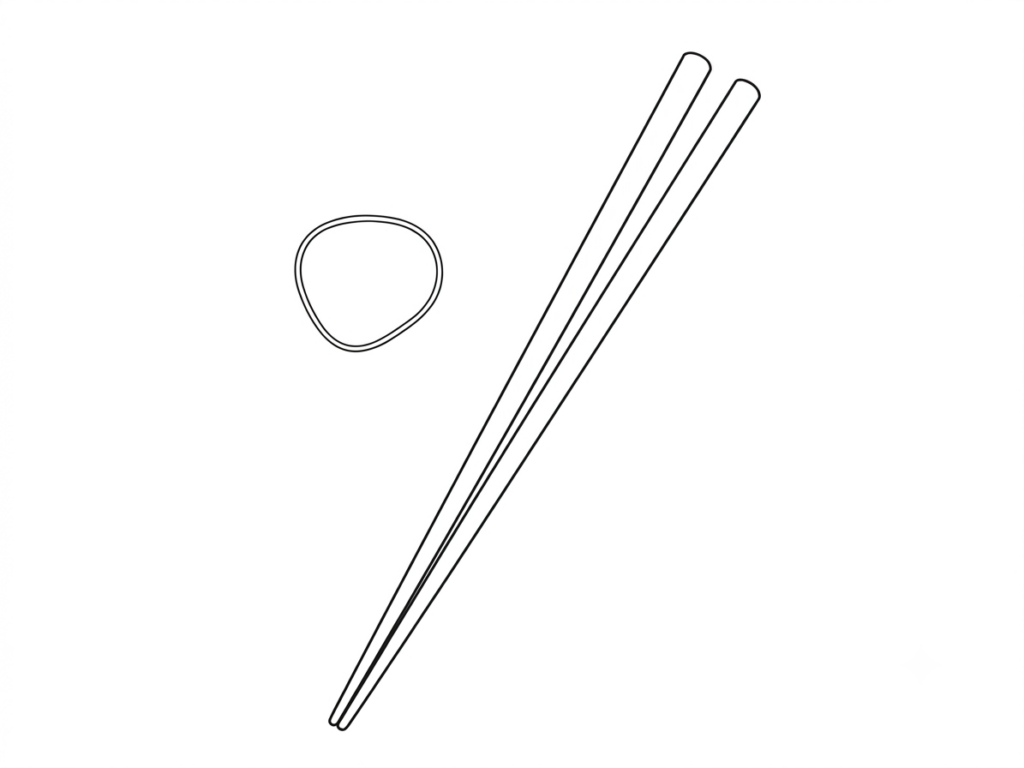
Just two things: a pair of chopsticks and a single rubber band. That’s it.
How to Set It Up
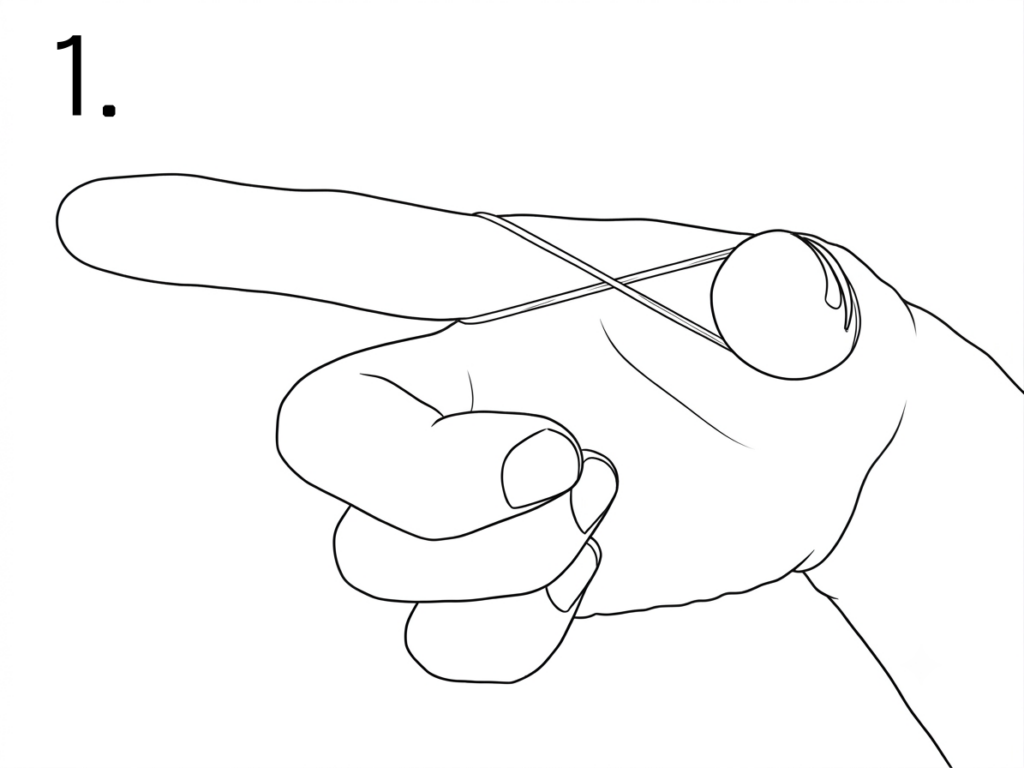
- Loop the rubber band into a figure-eight shape and place it around your thumb and index finger on your dominant hand.
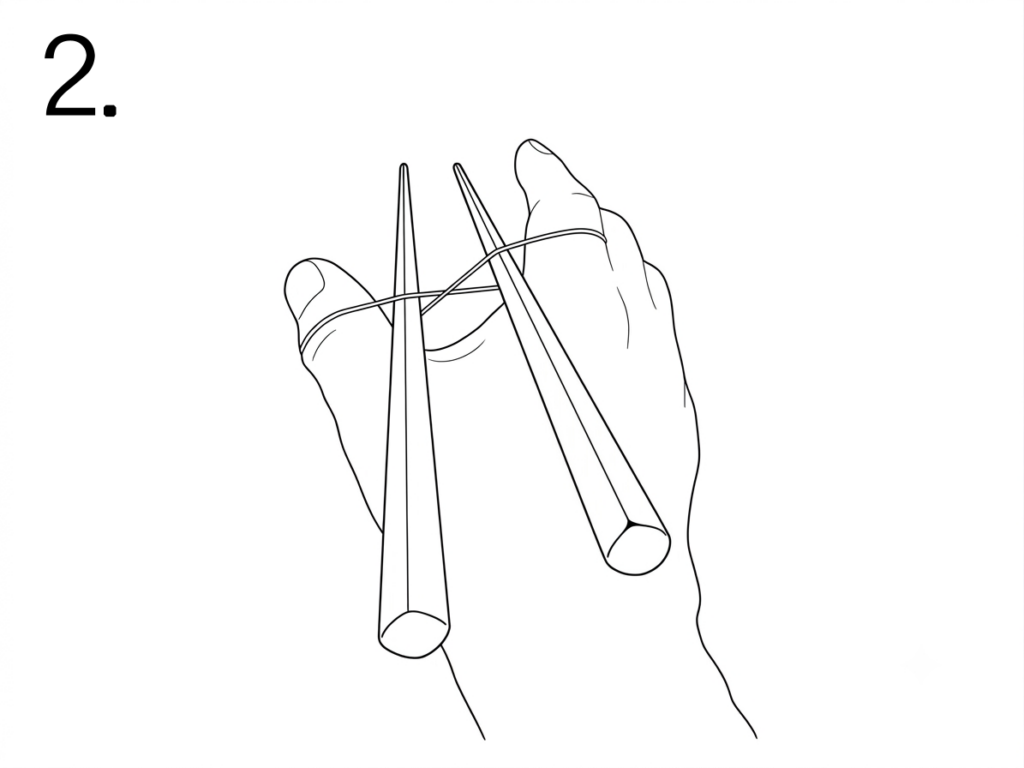
- Insert one chopstick into each loop of the figure eight, so each chopstick sits secured within its own loop of the band.
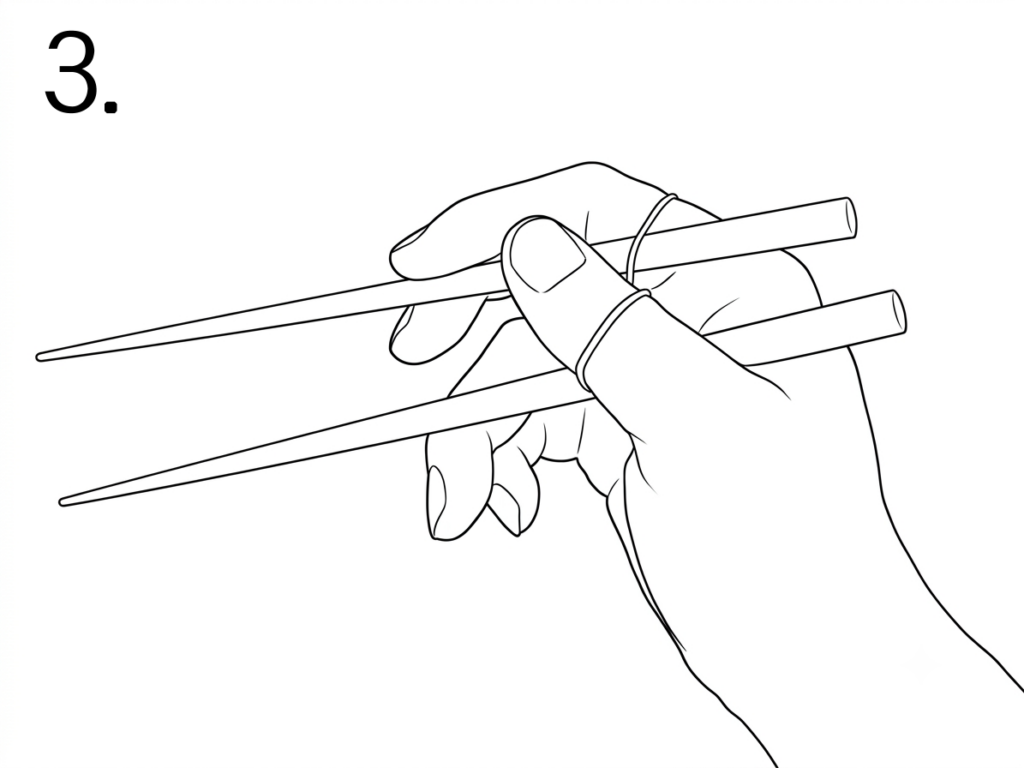
- Pinch both chopsticks between your thumb and the loops, rather than just resting them lightly. Simply letting the chopsticks rest against your thumb isn’t enough to hold them steady. You need your thumb to actually press against both chopsticks, pinching them in place, so the bottom chopstick stays completely fixed while only the top chopstick pivots against your thumb as the anchor point. This is the correct underlying motion for using chopsticks properly, and the rubber band does the work of holding everything in the right position while you get used to the movement.
(See the accompanying illustration for a visual walkthrough of each step.)
Why This Method Works
The hardest part of learning chopsticks usually isn’t the pinching motion itself, it’s keeping the bottom chopstick still while only moving the top one. Without any support, it’s easy for both chopsticks to shift around unpredictably, which is what makes early attempts feel so clumsy. The rubber band solves this by physically anchoring the bottom chopstick in place, so you can focus entirely on practicing the small, controlled pivoting motion of the top chopstick against your thumb, which is the actual skill you’re trying to build.
Practicing Once You’ve Set It Up
Another good way to practice is picking up potato chips with your chopsticks instead of your fingers. Since it keeps your hands clean, it’s a particularly handy practice method if you need to use your smartphone or a keyboard right after eating.
Frequently Asked Questions
Not at all. Restaurant staff are generally happy to provide a fork or spoon if you ask, and it’s a completely normal request. Learning chopsticks is more of a fun bonus challenge than a requirement for enjoying your trip.
It works well across a wide range of ages, from children first learning chopsticks to adults picking up the skill later in life, since it’s simple enough for a child to follow but genuinely useful for correcting an adult’s grip as well.
It varies by person, but many people notice a real improvement after just a short practice session or two, since the rubber band immediately corrects the most common issue: letting both chopsticks move independently instead of keeping one fixed.
Yes, any standard pair of chopsticks and a single rubber band is all you need. No specialized equipment is required.
Next Steps
Grab a spare rubber band next time you’re at a restaurant or back at your hotel room, and give this method a try before your next meal. It’s a small, low-pressure way to build real chopstick skill during your trip, and it makes for a fun bit of practice regardless of your age.
This post is part of an ongoing series on Japan travel planning. Check back for more guides on dining etiquette and cultural experiences.

| Rakuten Travel is one of Japan’s largest and most popular domestic travel booking platforms. It features an extensive database of hotels, ryokan, resorts, and other accommodations across Japan, making it an excellent choice for travelers looking to book stays throughout the country. Available in your language. If you’re using a computer, click “Language” in the top-right corner to change the language. If you’re using a smartphone, tap the person icon in the bottom-right corner, then tap “Language” to select your preferred language. |
